Different standards for electric vehicle charging stations
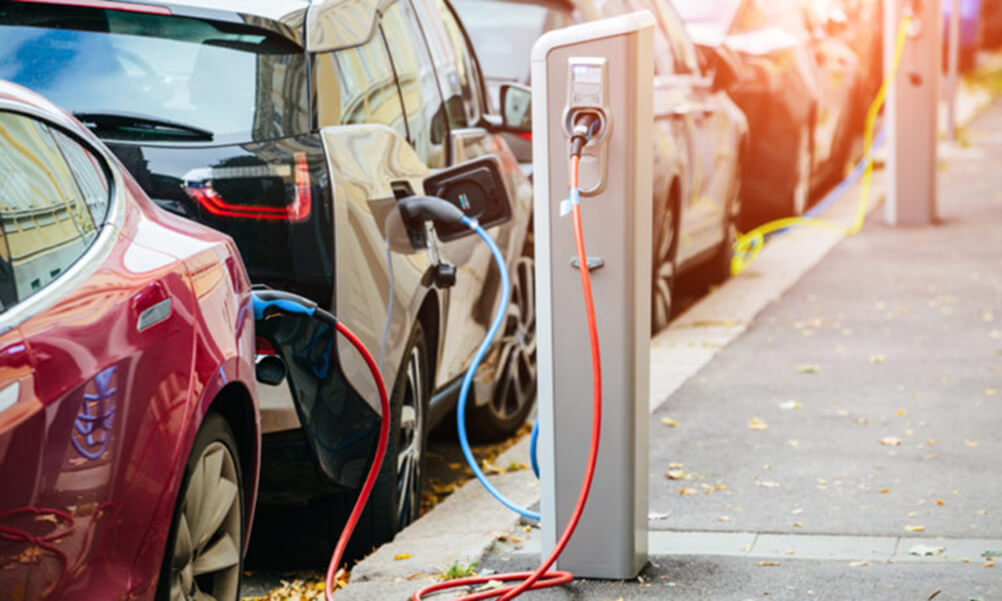
There are currently over 12,000 publicly accessible charging stations in Germany, with more than 35,000 charging points. Although the technology continues to advance, the range of these vehicles is still very limited—in some cases, electric cars need to be recharged after traveling just over 100 kilometers.
Anyone who wants to provide charging stations for their parking guests must first familiarize themselves with the various standards for electric charging stations (also known as charging points or charging stations). This is because not every electric car can be plugged into every charging station. While a home charging station can be customized to a specific vehicle, public charging stations must be compatible with a wide variety of vehicle models.
Direct current or alternating current?
The differences lie in the various plug types, current strength, current type, power output, and thus charging speed. A basic distinction is made between direct current (DC) and alternating current (AC). While electric cars can store only direct current (DC) in their batteries, almost all power sources (e.g., household or industrial outlets) supply alternating current (AC). Therefore, the energy from the power grid must first be converted to direct current. This conversion takes place either in the vehicle’s onboard charger (AC charging) or the rectifier in the charging station converts the current directly (DC charging) and then charges the vehicle’s battery. The connectors also differ depending on the charging type.
Advantages and Disadvantages of the Various Charging Stations
AC Charging Stations
In principle, all electric cars are suitable for charging with alternating current. For this reason, AC charging stations are primarily used at public charging stations, such as those located in company parking lots, supermarket parking lots, or hotel parking lots.
The so-called Type 2 is the European standard plug for electric cars, used at AC charging stations. It allows charging via three-phase alternating current at up to 63 amps per phase. However, depending on the onboard charger installed, the AC charging power—and thus the charging speed—can vary, sometimes significantly.
More than half of all publicly accessible charging stations in Germany (about 20,000) are Type 2 AC charging stations.
DC Charging Stations
For some electric cars, there is a faster alternative to AC charging: the direct current (DC) charging station. In this case, the expensive and heavy rectifier is built directly into the charging station, allowing electricity to be fed directly into the battery. This results in higher charging power. Such fast-charging stations are primarily intended for long-distance travel, to give electric vehicle users the ability to charge their electric cars at high power in a short amount of time. Currently, there are three DC fast-charging systems in Europe: the “Combined Charging System” (CCS), the Japanese CHAdeMo system, and the Tesla Supercharger.
In addition to the various charging systems, public charging stations also differ in other ways. These include, for example, the number of charging points per charging station. For instance, some charging stations can charge multiple vehicles at the same time, while others are designed for only one vehicle. Another important difference is the underlying pricing model—that is, the cost of charging an electric vehicle at a public charging station. Some charging stations can only be used as part of a membership program, while others charge based on the amount of energy charged or offer flat rates.
As a general rule, it should be noted that publicly available charging stations should be designed so that they can be used by as many drivers as possible, both from a technical standpoint and in terms of the contractual model.